
Sublimity in print.
My lolo had a map. I said the Philippines, against the blue paper, looks like a dog sleeping on its side. He pointed and said my hometown lay in its exposed ribs, in the flecks that connect to the head of this geographical creature. And from whichever map, the Philippines, depending what you compare it to, was like the fang of South America, fully possessed of green, except edged so far away. It looked to me as a filmic paradise tucked away in the ends of the earth, where explorers go in their ships, desperately trudging through high waters to race to its belly. That was historically true. And perhaps its beauty, too, was eternal, and she is still able to capture people from across the sea like how a Sirena gently swoons over sailors to dive headfirst into dark water, as if to say: “come, get lost in our islands”.
But my lolo simply shook his head and said, mousily in his old, sharp pulmonary breath, that I was too young and too far from home to understand, that the dog on that edge of the map that I’d been tracing with my thumb for a minute, was sick. Our country, he said, was sick.
I did not understand what sickness was for a country, not until the sixth grade when I first heard the words ‘Martial Law’. The way it jumps your tongue, and pries open your mouth, even the way it sounds, like a death sentence, frightened me. It meant to confer legal processes to the military body. But it can mean many things, example: the phrase starts with Martial, meaning appropriateness to war, meaning Mars, the roman god lording over it, and is paired with the word ‘law’, as though war was the law, and for a person to disobey it, was to face the genocide in wake of that terrible war. It meant authority over obedience, and obedience over will, it meant that freedom, now, was found at the bottom of some gun’s barrel, of some man in uniform, beholden to some man seated at the presidency. The history behind it, as it was said, was as terrible as its name and I imagine the sky pouring down from the overcast when the law was first announced, silver running, with the almost invisible colour rippling down the cants and bungalow roofs—I imagine the streets emptying out faster than a bottle of Red Horse—because it was September. But on the 23rd, 1972, it was day, broad as summer had ever been. And perhaps because of this, I learnt that scarier things do not come in great, dramatic thunderstrokes, like the blows of hammers, and of dreadful weather, sometimes it could come with just a voice, in the silence of our country.
Uncovering the ‘sickness’ my lolo brought up, much of this strangeness, I figured, had been done in the covers of a few people, hence the pin silence. Historically, the Martial Law was the last and highest octave, the peak of the pile upon which many of these secrets were kept buried under, wisp as a poison. The story of Marcos’ reign had been a complexity of bombs and terror, posters in which fingers unfurl towards the three, terrifying bold printed letters of CPP. The more prominent one was the incident in Plaza Miranda where two fragmented grenades were hurtled towards the stage lined with people of the liberal party, then to stores, then it took to the streets—this was fear sinking its teeth on the people.
In the same year as the law was declared, a much younger Juan Ponce Enrille, a member of Marcos’ retinue among many pawned into office, and the current Chief Presidential Legal Counsel of the Philippines, along with his bodyguard, was greeted with gunshots in their subdivision. Quickly the Martial Law catapulted after that, and much of the anxiety and distress became the subject of control for his followers. A decade later, Enrille confessed to the orchestration.
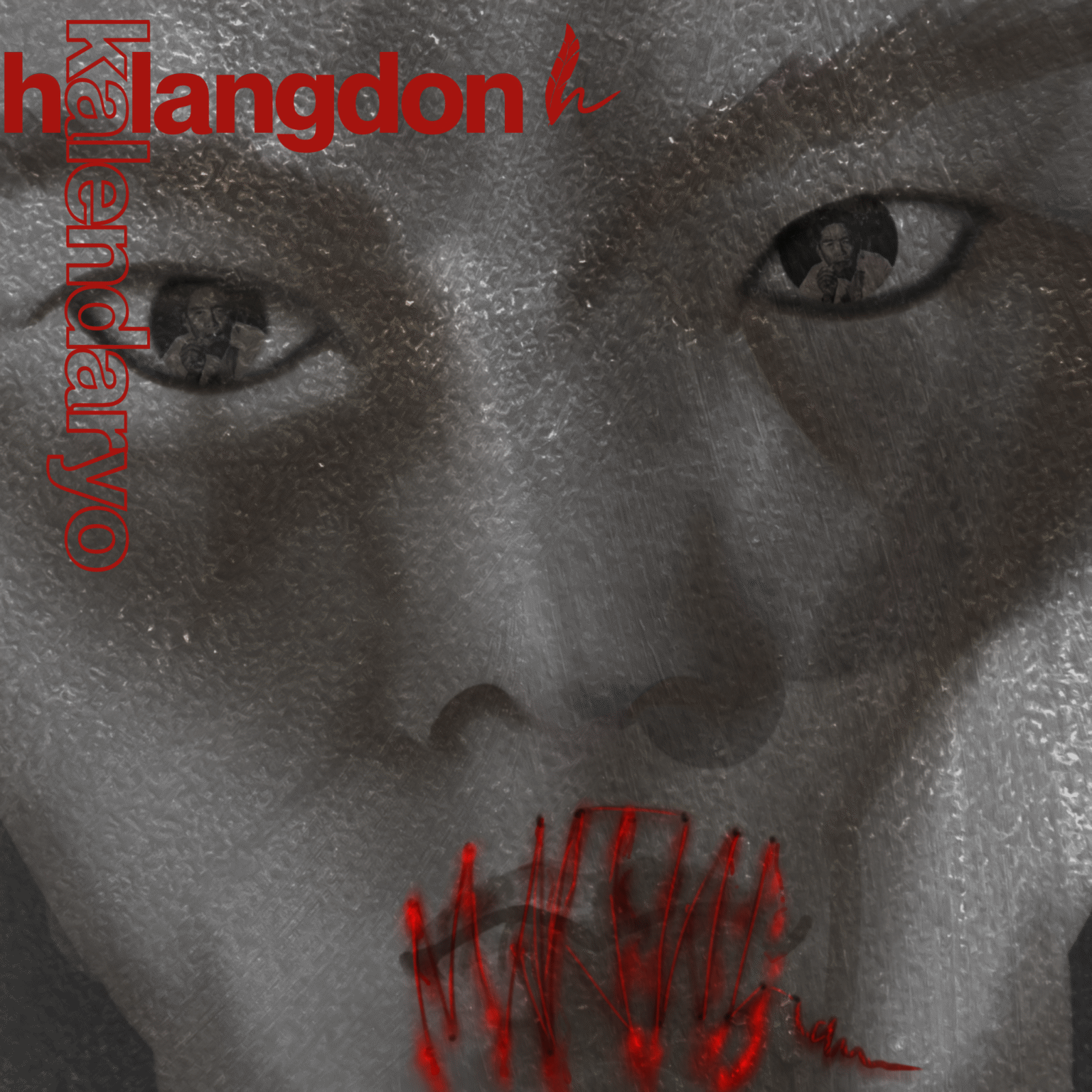
This was the path of least resistance. The sickness then was on the matter of which people to rise in power, and which to yank down, and Marcos had been scrupulous to keep even his chauffeur positioned in office. Many of his generals were just parts of his ribs too, splayed out into military positions in lieu of the ordinary governance absent in a martial law. In the process, sewn the mouths of congress and the press, and arrested thousands, reaching over thirty, of political opponents and journalists—murdered over three. Power became the strenuous race to silence information; for in it lay the essence of discourse. And to essentially sever it was to completely veer it off its course and annihilate any possible opposition to his cause, until he closes the system in his fist. The solution now becomes arithmetic, the sum of the three: fear, misinformation, silence.
The concept of Constitutional Authoritarianism is not entirely new and has evolved to take on many duplicitous forms—think of it as a shapeshifter, whose skin could easily turn to scale, from lungs to gills to an amorphous glob independent from oxygen. Twisting until you would find truths layered upon false-truths, layered upon more falsehoods, and all the while, legitimized by the country’s strange legalities. It becomes the system of half-truths. And without it, Martial Law, and the transference of the legal system, and ordinance, to the military force, would not have been breathed to life. The illegitimate nature and consequence of the staged attack on Enrille gave rise to a strawman, and the threats of bombing, and the already preconceived notion of a possible mobilization of the communist party in the south, had only concretized the idea of a plausibility for a martial law. The poison did not pour fully from the bottle, but in the form of small doses, spanning over years, how a cancer would have enveloped a person before the lumps would have actually showed. And such potency was the project Oplan Sagittarius, which detailed the extent of presidential power in the rare case of a national emergency. Only when the martial law was placed due to the pretense, did the intentions of such a project that was dismissed as mere contingency were revealed. This was the work of an illness seeping its claws in the heart of the government, coiling slowly, imperceptibly, until the molds take over, the organs compromised.
This Martial Law supersedes history, it becomes a memory, phasing in and out the minds of Filipinos. And while it has passed, this system, this amorphous creature still exists and has accelerated into our time. The name of Marcos still lives on and so does his concept. Authoritarianism is contingent on the people, is contingent on the government’s integrity, and only works when the symptoms are in its quietest stage. One must be loud, one must, in spite of the window dressings, be introduced to the core and principle values of democracy and in her fairness—one must remember.
When you come across that peculiar dog laying on the side of the map, try not to be fooled—it’s only as beautiful as you feel it, so you might want to check its heartbeat, if its breaths are even, if its blood still has sound. Because the sickness, then, for a country would always be the silencing of its own people. One must never forget.
September 21, 2025
- visuals byAbigail Barredo
ABOUT THE AUTHOR

Breathless from your sight and also my pneumonia.